

Profile
Marcella Dolan
Following in the footsteps of our latest installment in the series Women in Horology in which we poured our attention onto Susan Galvin, founder of Galvin Watches out of Australia, which seems to have been published way too long ago if I’m being honest, today we’re going to profile another multi-talented woman who co-founded a brand which cannot be pigeon-holed into one particular category except that of being solely unique and different from what the rest of the watch industry is doing. This in itself seems to be a new emerging secondary theme in this series of articles, that brands created by women and/or led artistically by them do not operate in the same way as all others brands do, as they follow a singular design trajectory which brings them to navigate within a path of their own, and which therefore cannot easily be categorized as making this type of watches or that one if it can indeed be categorized at all. And this will make sense as we explore the birth and development of this brand and dig into the extensive and expansive professional background of its lead creative person.
Today’s story therefore will bring our attention to Marcella Dolan who co-founded Stella Watches in 2020, based in New York City, U.S. After having studied the careers and the contributions many women have made to the watch industry in the past three years (that we have been running this series of articles) which has brought us to discuss female influencers, independent artists, marketing professionals, and recently then watchmakers and brand owners, we’re going to invest more of our time and energy to speak specifically about women who have created their own brands as they are in the unique position of driving the whole industry towards new creative paths which better fit today’s female enthusiasts’ personal horological preferences, and not those which we have been conditioned to believe to be true. In other words, women, for example, do not indeed all seek to wear a 30mm diamond-set pink mother-of-pearl dial elegant timepiece, but rather one which speaks to their core and personality and which are unfortunately too rare to find even in 2026. That is where Marcella and Stella come in.
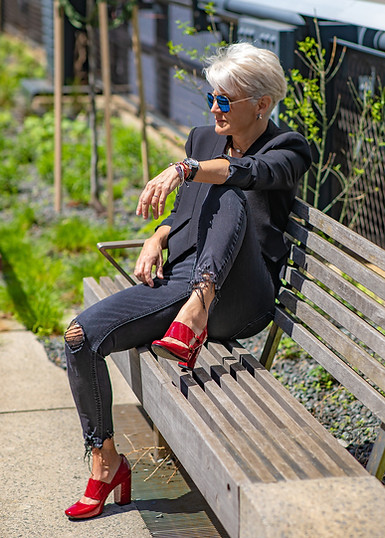
Marcella Dolan
A Unique Arrival in the Industry
Marcella’s path into horology started in her teenage years as it is often the case for many industry professionals. However, her first horological encounter was not the event which transformed her into a watch person. I nevertheless found it interesting to hear what this first experience was as it tells us a little bit about who Marcella is and where she is now driving the creative side of Stella. So, when Marcella was about 14 years old, her father gifted her a 28mm white dial sterling silver timepiece mounted inside a silver and turquoise Navajo-inspired cuff complemented by an expansion band at its center. The watch head itself was rather simple as she recalls but it was the bracelet it was accompanied by which left a mark on Marcella as it was majestic and the best piece of accessory she had at that time. She wore the watch not to tell the time but to match it with her favorite pair of cowboy boots and long fringe jacket which was the rage in the 1980s. No no, even though the sterling silver watch was quite something it didn’t make her into a watch person, her career did as we’re about to see.
After graduating from high school, Marcella started working for a cosmetics company to hand-draw black and white illustrations which were printed in magazines, way before that computers took the scene and facilitated this type of endeavour. She was thrilled to have this job as it allowed her to exercise her artistic gene and to support herself in her early 20s which wasn’t a given for any young woman wanting to become fully independent. One day, her Art Director left the company to join a smaller one called Hope Industries which licensed children’s watches. Marcella was asked to join which she happily did as the new company had excellent dental benefits which was, and still is today, a rather attractive perk for a young person to have in a benefits package. She immediately started designing all sorts of children’s watches which featured the hottest cartoon characters and series of the time: Barbie, Hot Wheels, and Teenage Mutant Ninjas to name a few. And that is how, perhaps surprisingly, that she got into watches, a switch she has never come back from luckily for us the global watch enthusiast community.


And there was one particular moment in her nascent career which left a strong mark on Marcella: the first time she saw one of the watches she designed being displayed on a store shelf as she was taken aback by the realization that she had created a commercial product a store wanted to sell and someone to buy and wear. This was a beautiful feeling and important realization that never left her and which drove her to spend no less than three decades in the corporate world designing watches for women, men, and children. After working several years for Hope Industries, Marcella joined a much larger enterprise called E. Gluck, founded by Holocaust Survivor Eugene Gluck who, with a business partner, was no less responsible for engineering the first LCD screen watch which cemented their reputation for being innovators in the horological industry. E. Gluck licensed many products which they manufactured en masse and mostly worked with large department stores such as Walmart. The company was also mainly known for its in-house brand, Armitron, which was often likened to Timex in terms of quality, price, and design.
At E. Gluck, Marcella was first brought in to design watches for all genders, ages, and all artistic affinities, from women and men to children, and was eventually made Executive Vice President of women’s watches. After spending 18 years with the company, she moved onto a smaller one called MZ Burger where she met Stephen, the future co-founder of Stella Watches. She didn’t stay there very long however as she was hired by another company called Haskall Jewelry which was attempting to get into the watch business and wanted to benefit from Marcella’s extensive expertise in the domain. Unfortunately, things didn’t work out as she hoped as the company did not understand the watch market and was eventually bought out by another larger one (maybe more than once) and then COVID happened. Even though her professional career came to a halt—which we’re about to dig into—the biggest and most important takeaway of spending nearly 30 years in the horological industry was that it is a tightly-knit community of passionate people who never leave it once they’ve gotten in. We will go back to that later on.

Creating Stella Watches
Stephen, whom we briefly talked about above, became a good friend and the two stayed in touch after Marcella left MZ Burger. They attended watch shows together, mainly WindUp as both our protagonists are based in New York City, and through these experiences she thought it would be quite neat if she were to design her own watches on her own terms. Nobody would tell her which size it should be, what color to go for, or which style was trendy at that time and which she should follow no questions asked. Marcella felt the profound desire to let her creativity run wild and Stephen was immediately on board. They realized early on that they would make for the perfect team actually since Marcella had all the creative experience one needs to create a watch brand and much more than that in fact, and because Stephen is the business person and the two would surely work well together. Marcella had also worked for so long in the corporate world that she felt exhausted being the younger sister of the business (as she put it) and not getting the same attention as those higher in the corporate ladder were getting.
Fate, if you believe in such thing, was such that the day Marcella and Stephen decided to launch their first collection on Kickstarter on March 24, 2020, from a distance of course as they were following COVID lockdowns, she got the call from her latest employer to let her know she was being laid off, an unfortunate news of course but which came as a blessing as it signaled that she could focus her entire attention onto Stella moving forward. And one of the things which was wonderful about creating her own brand therefore was the fact that she could design whatever she wanted and not be worried that whatever idea she would come up with had to be commercially viable which is a consideration she had to constantly have in the corporate world for thirty years which she felt was always limiting. No, instead she could bring to life designs she felt passionate about and which were, as she told me, unusual in the microbrand industry at the time as most people looking to buy watches were looking for cheap homages of expensive luxury models and that many brands' founders were animated by the same goal.

Breslin
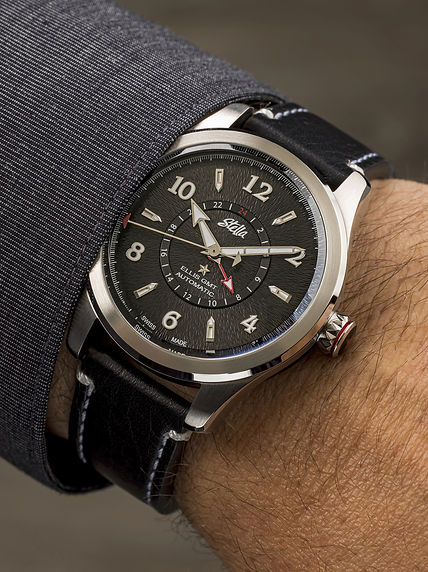
Ellis GMT
In comparison, Stella was immensely different from many other brands which occupied the market and that is a fact Marcella and Stephen have always been proud of. So on March 24, 2020, they launched a first collection called Felix which was a time + date model that came in six color variations which immediately became a trademark of Stella: offering models in numerous colors including two almost iconic denim textured dials which would surely also appeal to others, both men and women. (We will get back to this later on.) Following a first successful campaign, Stella then released the Breslin, an updated version of the Felix equipped with a better movement (Sellita SW200) and more importantly a finer textured dial as well as new colors, concurrently launching their first GMT called Ellis powered by a Sellita SW330 caliber. Recently Stella has relaunched the Felix in a MK2 version using components which were left over from the first generation which had been extremely popular, as people didn’t seem to be able to get enough of the deep denim textured dials and especially the Denim Blues.

Felix II
The Brand Aesthetic and Conceptual Philosophy
Before speaking to Marcella about her career and creating her own brand, I naively believed that its name was a mixy matchy of the two co-founders first names, Marcella and Stephen. (Apparently I was not the only one to have thought that thanks to the Horological Gods.) Far from it in fact, Stella simply means “star” in Latin and they chose Felix as the name for their first collection because it means “lucky” in Latin as well. Thus they placed themselves under their own lucky star when debuting their watch brand during the most intense months of a global pandemic. It paid off. More than that, by choosing this name, Marcella and Stephen didn’t want to pigeon-hole themselves into making X or Y type of watches, nor did they want others to associate their house of watchmaking with a particular type of horology. In a sense therefore, Stella is a neutral name from which one cannot deduct that the brand creates any particular type of watches except its own. To put things simply, Marcella and Stephen wanted to create cool genderless watches anybody could wear which is more complicated to do than it might seem.
Moreover, given the state in which the world was in March of 2020, they both felt that they were lucky to be able to put their creative sensibilities and business acumen into creating their own brand for a type of product fewer people were buying and that most of what was being sold was largely derivative of luxury models. And moreover moreover, Marcella infused her personal philosophy into naming the brand as she believes that anybody can be a star and enter the world with the intention of doing good and being the best versions of themselves. This is a positive message which tells us more about Marcella’s personality and what has driven her to remain in the watch industry for so long, something we will go back to later on as well. Therefore the duo managed to translate all of these elements into a bespoke design vocabulary which shines through every collection Stella has released thus far. The idea of the star can be seen for example in the way they designed the handset: the hour hand is the body of the star, the minute hand the tip of it, and the seconds hand represents the negative space inside of it.

Felix II

Breslin
The star shape can also be found in the brand’s secondary logo it typically places below the pinion and on the crown, oftentimes lumed. But Stella is more than the star logo and its deep meaning as earlier we mentioned the popularity, and almost iconic status, of its textured dials which made a first appearance in the Felix released in 2020. There were six versions of it including two deeply textured denim dials which proved to be the most successful of their first launch and which the brand is re-releasing in the Felix II collection which come in two versions: Light Wash and Dark Wash. Marcella initially came up with the idea of creating a collection which would remind people of the unique experience of putting on a fresh pair of denims which they would pair with a fine leather jacket. The idea for the latter element was brought to life by way of the cognac leather strap Stella sourced from a leather workshop in Mexico which specializes in boots and luggage. Stella also puts tremendous efforts in sourcing excellent straps which age gracefully which their customers immensely appreciate and often comment on.

From the deeply textured denim appearance of the Felix released in 2020 and again this year, Stella moved to the Breslin to rework the dial to offer a finer texture closer to actual linen than denim. Marcella and Stephen then paired this new texture which new dial colors all the while improving upon the manufacturing and finishing quality of the cases and dials to make a second stand-alone collection, albeit one which is 100% infused by Marcella’s creative sensibilities and profound attraction to color—which she didn’t really have the liberty to play with in the corporate world. And when she works on colors she steers clear of their typical iterations, which is why for example they introduced mint green in the Breslin instead of a racing green which is ever so popular in the watch world. And through these dial textures, Marcella wants to create a profound sense of movement which inspired the creation of their first GMT called the Ellis, composed of a series of interlocking waves forming a starburst pattern which emulates the feeling of movement. These are the dials Marcella aptly named “Kinetic Textured Dial.”

Ellis
The Question of Women's Watches
As it happens for any article in the series Women in Horlogy, I had to bring up the question (topic) of women’s watches and whether or not it should still be a thing in 2026. And Marcella’s opinion on the subject is unique since she has a unique experience in horology, as she has worked in it for longer than any other woman that I know of, or at least any that I have had the pleasure of interviewing in the past few years. In the three decades Marcella spent mostly working for others and big corporations, it was understood that designing watches for women came with a particular set of unspoken rules which dictated their size and visual appearance. For example, and in a very stereotypical manner, women’s watches couldn’t be larger than 30mm in diameter and often complemented with mother-of-pearl dials, diamond-set bezels, and indeed typical “female” dial colors such as pink. On the opposite side of the spectrum, whenever Marcella designed watches for men they had to be at least 40mm in diameter with black, white, or blue dials. There was little room for experimentation but now things are very much different.
When Marcella and I spoke for this interview we discussed the fact that through Stella, she wants to make cool watches anybody can wear. No men’s or women’s specific watches but more so genderless ones. Marcella herself has been attracted by a variety of timekeeping devices in her life and whilst one of her favorite watches is the Hublot Big Bang—a massive and colorful sporty watch not typically worn by women—she can also appreciate small, artistic, and elegant watches generally associated with the stronger gender even though not one woman should wear this particular type of watch nor any one man that other particular style of timepiece. When Marcella and Stephen first started Stella and attended watch shows, they noticed that since most brands still design many manly tool watches, many dudes walking by their table didn’t know what to think of their collections. But each year, one show after the other, more and more people come to their booth, both women and men, to buy their watches because they too are attracted by their cool factor, bespoke design vocabulary, excellent specifications, and textured dials.


In Marcella’s opinion, there aren’t enough watches today which are equally well suited for everyone and that is a fact my own research proves: through a series of surveys submitted to hundreds of brands I’ve worked with in the past six years through Mainspring, a majority of them continue to mostly cater to working age men and fewer to women. Stella is therefore an anomaly in the watch world which is why Marcella pours so much of her energy to design unique genderless watches which express her own creative affinities. Through Stella’s collections, through the choice of the brand’s name, they intended to create watches which cannot be pigeon-holed into one particular category and they have succeeded. Although the competition is fierce in the microbrand world, their efforts are paying off: the more shows they attend, the more Marcella puts herself out there, the more ok it becomes for men to sport a Raspberry dial and for women to buy their own watch, as trends do change and more people are looking to express themselves through the watches they sport on their wrist. Now couples shop together for new Stella’s.

Conclusion: Steady Growth and Authenticity
I conclude each conversation of this series of articles by asking a job-interview type of question: where do she see herself in the next five years? Where is the brand going? Marcella’s answers to these questions didn’t surprise me at all after that I had the opportunity to get to know her a little throughout our conversation. Earlier in this article I mentioned that her memory of her first watch would say something about her—a sterling silver watch mounted inside a Navajo silver cuff—as she remembered the splendor of its design and appearance and not so much the watch itself (which was rather simple.) As an artist, Marcella focuses, and lives for, shapes, colors, proportions, and creating a sense of movement through intricate dial textures as there are many emotions she wants to feel, and for people to experience, wearing her watches. Marcella sees these little machines as an extension of who she is and what they say about her, amongst a few things, is that she’s a watch designer. Through Stella then, Marcella is able to endow these seemingly simple mechanical time-telling devices with a unique personality.
Lastly, there is the question of the watch community and the fact that Marcella observed that any person who joins the world of horology never leaves it, not only because watches are addictive but more importantly, it is the people who exist in it which make it hard to leave. Throughout the three decades she spent working in the corporate world she’s made many friends, as it is where she met Stephen with whom she created Stella, and she continues to do so with her own brand. And one thing she can now do which she couldn’t before is to have a direct connection with her customers and supporters which is a core aspect of running a microbrand she aims to never abandon. She got to know many of her customers personally and to connect with them outside of Stella, which has become a key motivator to continue doing what she does best: to design cool watches for everybody. Moreover, Marcella wants to grow the brand a little more so that they can release new collections on a more regular basis in addition to adding variants of existing ones, all the while being able to continue to personally answer each email Stella receives.
I invite you to discover Stella and its collections here.
Thanks for reading.