
Peacock Divine Craft Ultra-Thin Tourbillon
Rethinking the Tourbillon
June 2, 2026
by Sophie Cassaro
I’ll be honest: I’ve never really been a tourbillon person.
For a long time, I saw them as one of those complications that sits somewhere between impressive and unnecessary. A mechanical flex. Something watchmakers build to prove they can, rather than something that meaningfully changes how you experience a watch. A very expensive solution to a problem most of us aren’t actually thinking about.
And realistically, there are very few situations where anyone truly needs to wear a mechanical watch in the modern age. Anyway. But owning the Peacock Divine Craft Ultra-Thin Tourbillon shifted that perspective for me. Not because it suddenly made the tourbillon “useful”. It didn’t. A tourbillon is still fundamentally impractical in any modern sense. But that also misses the point entirely.
What I hadn’t properly understood before is that a complication doesn’t need to be useful to be emotionally compelling. Because what this watch really is… is a moving piece of miniature engineering art. A constant, living motion on the wrist that quietly pulls your attention back toward it without asking permission.
And when it’s done well. Really well. It stops being about horological justification altogether. It becomes something much simpler. Joy. An object of engineering, craftsmanship, texture, and movement that you don’t analyse so much as instinctively watch. And this is the first watch that’s genuinely made me understand that on a visceral level, because it’s not something I’ve seen through glass or tried on briefly. It’s mine.
So buckle up kids. Due to the sheer nature of this watch, this article is a tad longer than my usual, because there’s so much to discuss and a totally new territory for me.

So… What Actually Is a Tourbillon?
Before going further, it’s probably worth being clear about what a tourbillon actually is, because it’s one of those watchmaking terms that gets used a lot with a kind of built- in reverence, without much explanation of what’s happening mechanically.
At its core, a tourbillon is a rotating cage that holds the escapement and balance wheel, the regulating organ of the watch. Instead of remaining fixed, this entire assembly rotates, usually once per minute. It was invented in 1795 by Abraham-Louis Breguet for pocket watches.
At the time, watches spent most of their lives in a vertical position inside a waistcoat pocket, and gravity would affect the regulating organ differently depending on orientation. The tourbillon was designed to average out those positional errors through constant rotation. So it was, quite literally, a solution to a very specific problem in a very specific context.

That context doesn’t really exist anymore in the same way. Wristwatches move constantly, and modern escapements are far more stable than anything Breguet was working with over 200 years ago. Which is why the tourbillon today isn’t really about improving accuracy in any meaningful practical sense.
It’s about making the regulating system visible. A rotating mechanism that turns something normally hidden inside a movement into something you can actually watch working.
Human Hands, Mechanical Discipline
What makes the Divine Craft interesting isn’t simply the presence of a tourbillon. It’s the tension between mechanical precision and visible human touch. The engraved dial was created by Professor Zhao Yi, an artist and academic specialising in traditional Chinese craftsmanship. And the more I learned about the process behind the watch, the more the piece began to make sense.
She describes engraving not as decoration, but as a balance between emotional rhythm and technical control. Calmness produces flow. Impatience subtly alters the line. That idea stays with you, because it changes how you look at the watch entirely. The dial is no longer just a textured surface. It becomes evidence of the person behind the work.

In high watchmaking, we often celebrate perfection so aggressively that we forget the emotional value of the hand behind the object. Here, the humanity isn’t incidental. It’s the point. And Peacock understands that exceptionally well.
The “Divine Craft” concept Tian Gong is built around the relationship between traditional Chinese handcraft and modern mechanical watchmaking. The name itself comes from Qiao Duo Tian Gong, referring to craftsmanship so refined it appears to rival nature itself. But importantly, the watch never feels trapped in nostalgia.
The traditional micro-engraving technique used on the dial, Zan Ke (錾刻), has a history stretching back thousands of years and was historically reserved for ceremonial objects and imperial artefacts. CEO Ma Yinghuan describes it as a crystallisation of “human touch and time” rather than industrial production.
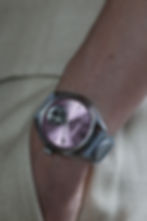
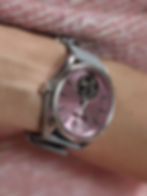
And I’m going to be honest with you, pictures just don’t do the dial justice. This micro engraving technique along with the constant movement from the tourbillon makes this watch feel alive. It’s a sight to behold.
Reframing the Tourbillon
This is where things get more interesting.
For most people, the tourbillon still exists in the realm of fantasy. The majority are five and six-figure watches, distant and aspirational. And that distance has shaped how we emotionally interpret the complication itself. It has become a symbol before it has become an experience which feels akin to an IYKYK for the upper echelons of watch enthusiasts with deep pockets.
But the Divine Craft quietly disrupts that. At under $5,000 ($4,899 to be exact), it removes some of that artificial separation. And once that barrier softens, something shifts: you stop thinking about the tourbillon as status, and start engaging with it as craft. That distinction matters.

Because underneath the price mythology, what remains is still serious watchmaking. Underneath that, it’s still very serious watchmaking. The in-house free-sprung tourbillon calibre (PAX9610A) runs at 28,800 vph with a 68-hour power reserve, and the whole architecture is built around being ultra-thin at 8.9mm overall.
That alone would already be interesting. But the finishing is where it starts to feel even more “fancy” than I would expect for the price.

It’s genuinely impressive. You’ve got hand-applied anglage, including sharp internal corners that are rarely seen at this level, perlage in places most people will never look, and a combination of brushed and polished surfaces that catch the light beautifully. It feels less like finishing done for marketing photographs and more like finishing done because somebody cared enough to do it properly. Even the engraved “Peacock Eye” screws in the tourbillon cage are exactly the kind of details which set this watch apart from other ‘entry level’ Tourbillons currently on the market.
Production is also tightly controlled 108 pieces per colourway, across four variations. This is ‘accessible’ haute horology after all, not mass produced, and the fact you won’t be seeing this on many wrists is most certainly going to appeal to watch enthusiasts who care about exclusivity and can most certainly talk at length about how this watch was created to anyone who dares to ask about it (my husband made the same mistake and instantly regretted it because twenty minutes later I was still going on about it).

Peacock and Modern Chinese Horology
Peacock occupies a fascinating position in modern watchmaking. They’re not a new microbrand, in fact, they’ve been around since 1957. They aren’t chasing identity either, nor are they a Swiss maison leaning on inherited prestige. They sit somewhere more interesting: a Chinese manufacturer attempting to define its own haute horology language.
And even if the name Peacock isn’t immediately familiar to you, there’s a good chance you’ve encountered their work already if you spend any time around the more enthusiast side of watch collecting.

Microbrand aficionados will almost certainly know Atelier Wen, whose Perception collection originally used Peacock’s customised SL1588A ultra-thin automatic calibre. I was lucky enough to spend a few months with a Perception while reviewing it, so I’m not entirely new to Peacock’s movement work. The SL1588A is actually a genuinely interesting movement in its own right: an extra-thin 3.4mm calibre running at 28,800vph, which Atelier Wen worked closely with Peacock to refine and regulate. I remember being pleasantly surprised by just how well it performed during my time with the watch.

That prior experience is partly why the Divine Craft interested me in the first place. Because while Peacock might still feel unfamiliar to many Western collectors, they’re not appearing out of nowhere. Speaking with CEO Ma Yinghuan, it became clear the Divine Craft is intended as exactly that: not just a product, but a statement of cultural confidence. A fusion of traditional Chinese artisanal techniques and contemporary mechanical watchmaking, framed as a crystallisation of “human touch and time”.
That philosophy becomes visible once you understand it.
The movement is fully in-house, built around ultra-thin architecture while maintaining traditional finishing standards. At 8.9mm thick, it remains remarkably slim for a tourbillon, but still carries presence. What matters more is that Peacock refuses to separate technical craft from cultural identity. Where Swiss haute horlogerie often becomes the default visual language of “seriousness”, the Divine Craft leans into Chinese artistic heritage instead of borrowing from it, which I find both fascinating and genuinely refreshing.

The Dial: Why It Feels Alive
As touched on earlier, the dial is where the watch becomes emotionally persuasive.
It was hand micro engraved by Professor Zhao Yi with three hand held tools made specifically for this project, and I’ll admit something personal here: when I first learned that a woman artist had created the central visual element of the watch, it genuinely made me pause in a good way.
High horology is still such a heavily male-dominated space that seeing that female artistry acknowledged matters more than it probably should have to. But what mattered more was learning that her selection wasn’t symbolic. It was based purely on merit.
Multiple artisans were considered. Peacock chose her because her technical discipline and artistic philosophy aligned most closely with the project. And that matters, because it reframes the work entirely. She describes the process as a shift from “pure artistic expression” to “exacting industrial luxury design,” a restraint of ego in service of system and function.
That tension shows in the dial itself.

Engraving lines converge toward the tourbillon axis, creating structure without killing organic variation. The result is controlled, but not sterile. It’s a sight to behold. You can feel both systems at once. And that’s why the watch feels alive rather than simply decorated.
One of my favourite details sits in the tourbillon itself: a natural diamond integrated into the seconds pointer. In most watches, that would feel like excess. Here, it’s the opposite. It’s structurally embedded, constantly moving, and so restrained in execution that you almost miss it. When I finally noticed it properly, I had one of those unfiltered moments of appreciation you don’t really plan for. In short, I yelped with joy.
That subtlety defines the entire piece. Nothing feels added for effect. Even the Petaline Pink dial which could very easily have gone wrong, completely avoids cliché. A rhetoric I’m frankly tired of. Let’s be clear, pink is for everyone. More importantly in this example, the colour enhances the engraving itself. Depending on the lighting, the texture almost appears to shift beneath the surface.
And because the design language is so restrained, the colour never feels gendered in the simplistic way pink watches often do in luxury marketing.

Styling the Divine Craft
One thing that genuinely surprised me about the Divine Craft was how easy it was to style.
Tourbillons often come with a certain visual heaviness. Larger cases, highly polished surfaces, open-worked dials, and an overall sense that they’re trying very hard to remind you they’re complicated. The Divine Craft feels much more restrained than that.
The slim profile and balanced proportions make it surprisingly versatile, while the engraved dial provides enough visual interest that the watch never needs to dominate an outfit to feel special. The Petaline Pink version was the biggest surprise for me. It is unapologetically pink, and I love that. But it’s such a soft, balanced shade that it behaves almost like a neutral when you’re getting dressed.

Over the time I’ve spent with it, I’ve worn it with beige, white, grey, blue, and matching pink tones, and it always felt cohesive. One of my favourite combinations was pairing it with a grey strap, a beige waistcoat, wide-leg shorts, and a matching silk pink tie, which allowed the warmth of the dial to really shine. The colour also works beautifully with textured fabrics. My husband particularly enjoyed wearing it with a beige linen shirt, which complemented the softness of the dial perfectly.
I think that’s what surprised me most about it. The pink doesn’t feel limiting. Instead, it adds warmth. It softens an outfit slightly. It brings a bit of colour without becoming the only thing you notice. And that feels very consistent with the watch itself. Despite the tourbillon, despite the hand engraving, despite everything happening mechanically, it never feels like it’s trying to overpower the person wearing it.

Wearing It
On the wrist, the Divine Craft is better than its specifications Suggest.
The 39.5/ 38mm proportions feel balanced rather than large, and very much sits in that sweet spot which will work on the tiniest of wrists like mine (13.5cm) while still having enough presence for significantly larger wrists respectively. At 8.9mm thick it slides under a cuff with ease, which is still unusual for a tourbillon.
The lug and case design deserves credit too. The inward curve and alternating brushing and polishing make the watch wear smaller and more fluid than the numbers suggest and the fact it’s made using 904l steel all the more impressive. But the real experience is tactile.

The manual winding experience is so smooth. It feels oddly luxurious if that makes sense? There’s barely any resistance through winding the crown until it becomes clear you’ve finished the end of the winding cycle. It’s these little details that elevate the experience of this watch.
And then the tourbillon takes over again, moving beneath the dial, pulling your attention back every time you glance down. I barely notice the time because my eyes are constantly drawn to that hypnotic tourbillon. Which feels like the point. Can you tell I love this watch?

What I’d Still Improve
As much as I genuinely enjoy the Divine Craft, a few things could be refined.
The branding, for one. I’d personally love to see Peacock lean further into its identity visually, whether through Chinese characters or a more abstract peacock motif. The current execution is safe, but slightly conservative.
The strap is another area. It’s well made, but simply too long for smaller wrists. Offering multiple lengths from the factory would make a noticeable difference. It’s also worth noting that the lug width is not the standard 20mm. I managed to squeeze one of my 20mm straps with a very soft leather on there but 19mm is the perfect size. Definitely not a big deal, but a shame that I can’t use the majority of my straps. So definitely worth noting.
Servicing, though, is reassuring. A two-year warranty and clear post-warranty support through their service network makes ownership feel less uncertain than many expect from smaller manufacturers. And that matters more than people admit. Emotional design is one thing. Long-term confidence is another.
Final Thoughts: A More Human Kind of High Horology
What stayed with me most after interviewing Ma Yinghuan and Professor Zhao Yi wasn’t ambition. It was restraint.
Every part of this watch feels controlled: finishing, design, artistic input. But within that discipline, there is still warmth. And that’s ultimately why it landed differently for me. Because despite its complexity, the Divine Craft never feels emotionally distant. It feels human.
Not because it abandons precision, but because it allows visible human traces to exist alongside it. It doesn’t try to imitate Swiss haute horology. It builds its own language, one that balances mechanical order with visible Craft. And in doing so, it quietly reframes what modern high horology can be.
I started this piece not caring much for tourbillons. Mechanical theatre, impressive but emotionally detached. The Divine Craft didn’t change the complication. It changed how I see it. Not by making it more useful. But by making it feel more human. And once you’ve seen a tourbillon like that, it’s hard to unsee it.
If you’re interested in reading the full interview of CEO Ma Yinghuan and Professor Zhao Yi please find the link here.


